
Navigating the Evolving American Real Estate Landscape: Expert Insights for 2026
The year 2025 has undeniably reshaped the American real estate market, moving us firmly beyond the frenetic post-pandemic era. As the final weeks of the year unfold, a palpable shift in momentum is evident. The urgency that once propelled buyers has subsided, replaced by a more considered approach. Homeowners and prospective purchasers alike are now recalibrating, reassessing their priorities, and peering ahead to discern the trajectory of the housing market as the festive season concludes and the calendar turns to 2026.
To provide a comprehensive outlook, I’ve consulted with leading brokers, seasoned developers, and insightful industry veterans from across the nation. Their collective perspectives offer a nuanced understanding of the pivotal forces poised to sculpt the American housing market trends in 2026.
Stabilizing Home Prices: A Dose of Realism, Not a Market Collapse
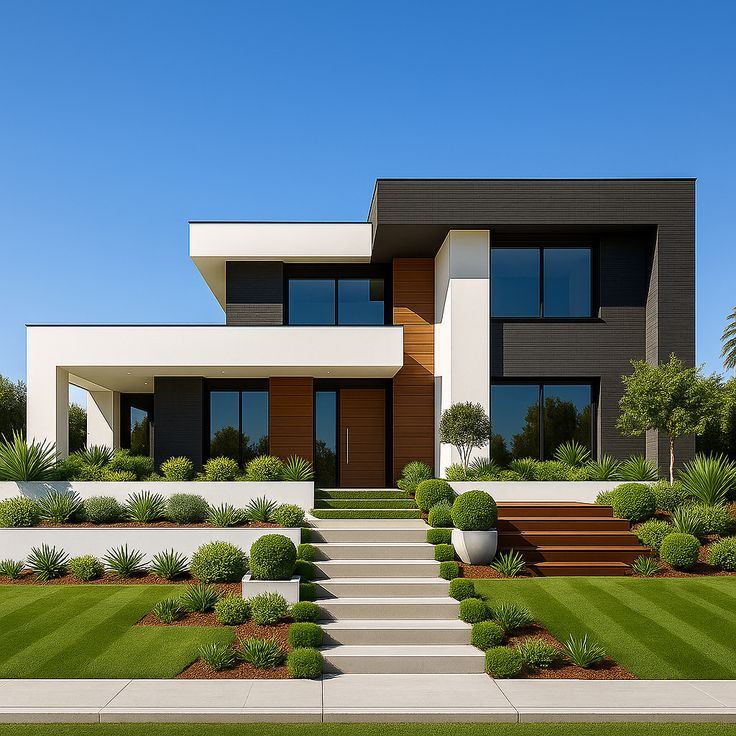
The perennial question on everyone’s lips revolves around pricing. While many aspiring homeowners, currently priced out of the market, harbor a fervent hope for a dramatic price correction, the consensus among seasoned professionals suggests such a scenario is unlikely.
“Nationally, we’re not anticipating a significant downturn,” explains Mike Martirena, a distinguished member of the Ivan & Mike Team at Compass in South Florida. “Rather, we foresee modest appreciation, likely in the one to two percent range. However, the true narrative lies in the localized variations. Certain neighborhoods might experience a softening, while others will maintain their strength. 2026 is shaping up to be a micro-market year, where granular, neighborhood-level data will hold far greater significance than broad national averages.”
This perspective suggests that for many potential buyers, the most pragmatic approach might be to shift their focus from wishful thinking to strategically broadening their search criteria. Exploring adjacent communities or considering properties that might not perfectly align with initial desires, but offer compelling value, could be key.
Mortgage Rates: A Gentle Easing, But Buyer Psychology Reigns Supreme
The prospect of declining mortgage rates offers a glimmer of optimism. However, it’s crucial to manage expectations; the era of historically low, sub-three percent rates is unlikely to return in the immediate future. “I believe rates will indeed moderate, but likely in a restrained fashion,” shares Libby McKinney Tritschler, a highly respected broker with William Raveis, Team AFA. “The more profound shift in 2026, in my estimation, will be the buyer’s psychological adjustment to prevailing mortgage rates. Buyers are increasingly adapting to a reality where rates in the five to six percent range are becoming normalized. Market activity will surge not due to a rate collapse, but as confidence solidifies. We are already observing this settling of uncertainty, which is a catalyst for increased market movement.”
Once potential buyers fully embrace this market reality, their decision-making process regarding significant purchases – whether to commit to a new home, continue renting, or perhaps invest in a property that is smaller than ideal or not their ultimate dream dwelling – will become considerably more streamlined. This psychological recalibration is a critical driver for 2026 housing market trends.
The Evolving Role of Unsold Inventory: From Listings to Leases
As properties remain on the market for extended periods, a growing number of sellers who are not under immediate financial pressure to liquidate are venturing into an arena they hadn’t anticipated: becoming landlords, at least on a temporary basis. “We’re observing an increasing trend of owners choosing to lease their properties rather than selling into a tepid market, particularly if they are unable to achieve their desired sale price,” notes Martirena.
Developers are adopting a similar strategic stance. Many are currently constructing homes with the intention of them serving as rental properties initially, with plans to sell once market conditions become more favorable. This approach helps mitigate carrying costs and maintains an asset’s value while awaiting a more opportune selling window, influencing real estate investment opportunities in 2026.
Artificial Intelligence: Revolutionizing Home Search, Valuation, and Brokerage Efficiency
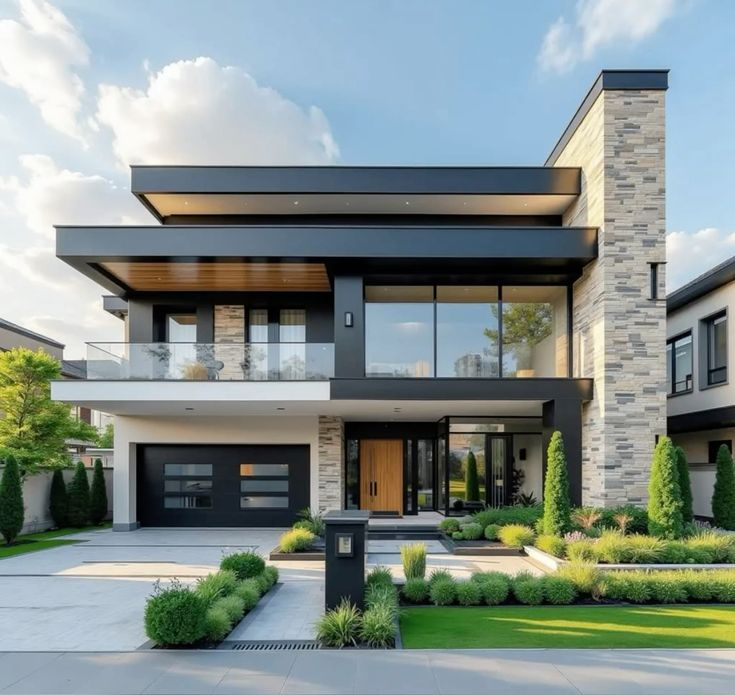
The pervasive influence of Artificial Intelligence is already dramatically altering how consumers search for properties and how real estate professionals conduct their business. This transformative impact is set to accelerate exponentially in 2026. Arman Javaherian, CEO & Co-Founder of Homa, anticipates that this evolution will predominantly benefit consumers. “By 2026, AI will empower the emergence of novel real estate platforms that diverge significantly from the conventional home search interfaces we are accustomed to today,” he posits. “Instead of merely facilitating listing browsing, these platforms will be engineered to assist buyers in comprehending critical decision-making factors, including pricing trade-offs, potential associated risks, and the tangible steps involved in transitioning from browsing to ownership. As AI assumes a greater share of analytical and procedural tasks, it concurrently compels a fundamental reevaluation of internal operational strategies within real estate companies.” This transformative shift will be a cornerstone of future real estate technology trends.
While some within the real estate sector have harbored apprehension or even fear regarding AI’s burgeoning influence, its integration is now an undeniable reality. Embracing its capabilities is not merely advantageous; it is essential for staying competitive.
AI: An Augmentation, Not a Replacement, for Real Estate Agents
Brandon Charnas, co-founder of Current Real Estate Advisors, exemplifies the view of AI as a potent productivity enhancer rather than a direct threat. “I leverage tools like ChatGPT extensively, utilizing them for tasks ranging from simplifying lease agreements and drafting correspondence to securely managing sensitive data within transactions,” he shares. “My prediction is that professionals will increasingly recognize and embrace AI as the definitive pathway to the future of real estate.”
Although AI has indeed automated certain job functions, Charnas remains confident in its inability to supplant the core human element of brokerage. “While AI cannot replicate the indispensable human touch of a broker, nor the intricate web of relationships cultivated, including access to off-market opportunities, it can undoubtedly equip professionals with the tools to achieve unprecedented levels of productivity.” This sentiment underscores the evolving role of real estate professionals in the AI era.
Jennifer Roberts, a seasoned real estate broker at Coldwell Banker Warburg in New York City, is another ardent advocate, already employing AI to enhance pricing accuracy – a perennial challenge for agents. “AI-powered tools will empower brokers to provide sellers with more precise valuation guidance,” she explains. “Agents can furnish sellers with granular data – encompassing renovation quality, floor and ceiling heights, views, building type, and more – that underpins these precise valuations. This, in turn, will hopefully alleviate the industry’s persistent bane: the overpricing of homes. Consequently, brokers will appear more astute as pricing decisions become data-driven rather than purely subjective.” The most significant advantage? A quantifiable reduction in a listing’s time on market. “A swifter sale significantly enhances the likelihood of securing a strong offer, particularly when a property is not perceived as ‘stale’ due to prolonged market exposure.” This focus on data-driven real estate pricing strategies is crucial.
Design as a Differentiator in a Stabilizing Market
Today’s homebuyers are more design-discerning than ever before. Whether influenced by the omnipresent nature of social media or the rapid cycle of microtrends, the era of virtually interchangeable interiors – think ubiquitous quartz countertops and matte black hardware – is now presenting a disadvantage for sellers. “Design has always held sway in New York, but its importance is undergoing a pronounced acceleration,” states Vickey Barron, a top broker at Compass. “Years of new development have resulted in increasingly homogeneous interiors: a predictable palette of neutral tones, standardized furnishings, and identical staging choices. What was once perceived as modern and clean now risks appearing predictable, even uninspiring.”
This oversaturation of a particular aesthetic has led to buyer fatigue and a diminished sense of excitement with current market offerings. “As potential buyers scroll through listings or navigate apartments that bear an uncanny resemblance to one another, their interest inevitably wanes. The crucial emotional connection and the thrill of discovery are absent. A home should elicit an immediate visual response that captivates attention and encourages lingering. Uniqueness, the incorporation of quality materials, and thoughtfully curated elements that narrate a story are what imbue a property with this power,” Barron elaborates. For those considering luxury real estate design trends, this is a critical consideration.
Distinctive Interiors Commanding Premium Pricing
Consequently, investing in unique finishes and sophisticated design is no longer viewed as a speculative gamble but rather as a prudent financial strategy, according to Barron. “Moving forward, properties that distinguish themselves through exceptional design, superior craftsmanship, and unwavering consistency will capture significant attention and command stronger pricing power,” she advises. “I frequently caution sellers that ill-chosen furnishings alone can inadvertently cost them hundreds of thousands of dollars by distracting potential buyers rather than drawing them in.” This highlights the growing importance of interior design in real estate valuation.
Professional Staging: A Non-Negotiable in 2026
Sellers aiming to maximize their property’s value without engaging professional staging are likely forfeiting substantial financial gains. “Every listing must be ‘camera-ready’,” emphasizes Martirena. “In an environment characterized by price stabilization, buyers are drawn to certainty – a pristine condition, appealing design, and the perception of minimal immediate projects. If a property fails to make a compelling impression on a smartphone screen, it is highly unlikely to resonate during an in-person viewing.” This underscores the critical nature of real estate staging services for optimal market performance.
In the high-end market, presentation assumes even greater criticality, according to Lisa Simonsen, a prominent broker at Brown Harris Stevens. “In 2026, the discerning luxury buyer will continue to prioritize visual appeal and swift evaluation, often preceding any physical visit,” she notes. “This elevates the significance of strategic lighting, appropriately scaled furnishings, art placement, and a cohesive aesthetic that photographs and presents credibly. Superior presentation will increasingly function as a pricing lever rather than a mere aesthetic embellishment.”
Virtual Staging: Enhanced Realism, but In-Person Impact Prevails
For sellers operating with more constrained budgets, virtual staging remains a viable option, and advancements in AI have rendered it considerably more convincing than in years past. “Previously, one could easily discern virtually staged images from a considerable distance; they often appeared artificial and rather kitschy,” remarks Abigail Godfrey of Coldwell Banker Warburg. “Today, differentiating between virtually staged and authentically photographed spaces has become a far more challenging task.” While AI-powered virtual staging is improving, the allure of a physically staged space remains.
Off-Market Transactions Gaining Traction in Competitive Enclaves
If you observe a consistent flow of moving trucks in your neighborhood without a commensurate number of visible listings, the prevalence of off-market transactions may be the underlying reason. “Sellers increasingly prioritize control and privacy, while buyers seek preferential access,” observes Mike Fabbri of The Agency. “This dynamic inherently favors well-connected, relationship-driven agents. The most intriguing deals rarely originate from public listing portals.” This trend points to the growing significance of private real estate listings.
Private Listings: Primarily a Boon for the Ultra-Luxury Segment
However, this strategy is not universally applicable and tends to benefit primarily sellers with ultra-luxury properties, as Simonsen explains. “Why opt for a private listing if your condominium building or subdivision features numerous units that are virtually indistinguishable from one another? For the majority of properties, the most effective strategy for maximizing value lies in a comprehensive public marketing campaign designed to engage the broadest possible pool of prospective buyers.”
Insurance Costs and Climate Resilience: Emerging Drivers of Buyer Decisions
The escalating costs of insurance and ongoing operational expenses are rapidly evolving into paramount considerations for prospective homebuyers. “Especially within states like Florida, insurance premiums and operational expenditures are becoming first-order variables in the decision-making process,” Martirena observes. “Buyers are placing a premium on factors such as roof age, flood and fire mitigation measures, impact-resistant glass, and backup power solutions – all elements that demonstrably reduce risk and long-term financial outlay.” This highlights the growing importance of climate-resilient real estate and its impact on property value.
This heightened awareness of resilience and associated costs is manifesting nationwide. For instance, in Los Angeles, one of the earliest rebuilt residences following recent devastating wildfires in Pacific Palisades now incorporates an advanced fire-defense system engineered to safeguard the structure during future catastrophic events. Such features are anticipated to become increasingly commonplace, particularly in regions susceptible to wildfires where insurance premiums have reached unprecedented levels.
Move-In-Ready Homes: Outperforming Renovation Projects
The definition of “move-in ready” is undergoing a significant redefinition. In 2026, this term increasingly encompasses properties that are not only fully renovated but also entirely furnished. “We anticipate a continued trend of bidding wars for properties that are immediately habitable,” states Shaun Pappas, Partner at Starr Associates. “The persistent rise in construction costs, encompassing both labor and materials, has created a more challenging environment for homebuyers undertaking renovation projects. Consequently, we foresee a potential softening of housing prices for properties requiring extensive work, juxtaposed with an appreciation in the market value of homes ready for immediate occupancy.” This trend underscores the growing demand for turnkey properties and the associated premium they command.
Following a challenging market dynamic in 2025, it is entirely understandable why buyers are seeking to imbue the home-buying process with as much ease and predictability as possible.
As we look towards 2026, the American housing market presents a landscape of nuanced shifts and evolving priorities. Understanding these trends is paramount for anyone looking to buy, sell, or invest.
Ready to navigate these dynamic 2026 housing market trends with confidence? Connect with our team of seasoned real estate experts today to receive personalized guidance and strategic insights tailored to your specific goals. Let’s chart your course to success in the evolving real estate landscape.